Applied technology
Every project is based on a practical use case, with attention to reliability, safety, automation and measurable improvement in daily life.
A collection of practical technology projects combining home automation, digital systems, service management, multimedia infrastructure, remote assistance, robotics and continuous experimentation.
The projects presented on this page illustrate a practical, engineering-oriented approach to technology. Rather than being abstract concepts, each initiative was developed around a real requirement: improving safety, simplifying everyday routines, centralizing information, automating processes, enabling remote support or exploring the potential of modern robotics.
These projects combine hardware, software, sensors, networked devices, automation logic, microcontrollers and user-oriented interfaces. Their value lies not only in the final result, but also in the process of analysis, testing, integration and gradual improvement that turns an idea into a reliable working system.
The common philosophy behind the work is clear: technology should be useful, understandable, reliable and sustainable over time. Each system is designed to respond to a concrete need, while remaining open to future development, refinement and integration with new tools.
Every project is based on a practical use case, with attention to reliability, safety, automation and measurable improvement in daily life.
Devices, sensors, cameras, networks, servers, microcontrollers and software platforms are combined into structured systems that work together in a coordinated way.
The projects evolve progressively through prototypes, testing, improvements and new versions, documenting a continuous learning and development process.
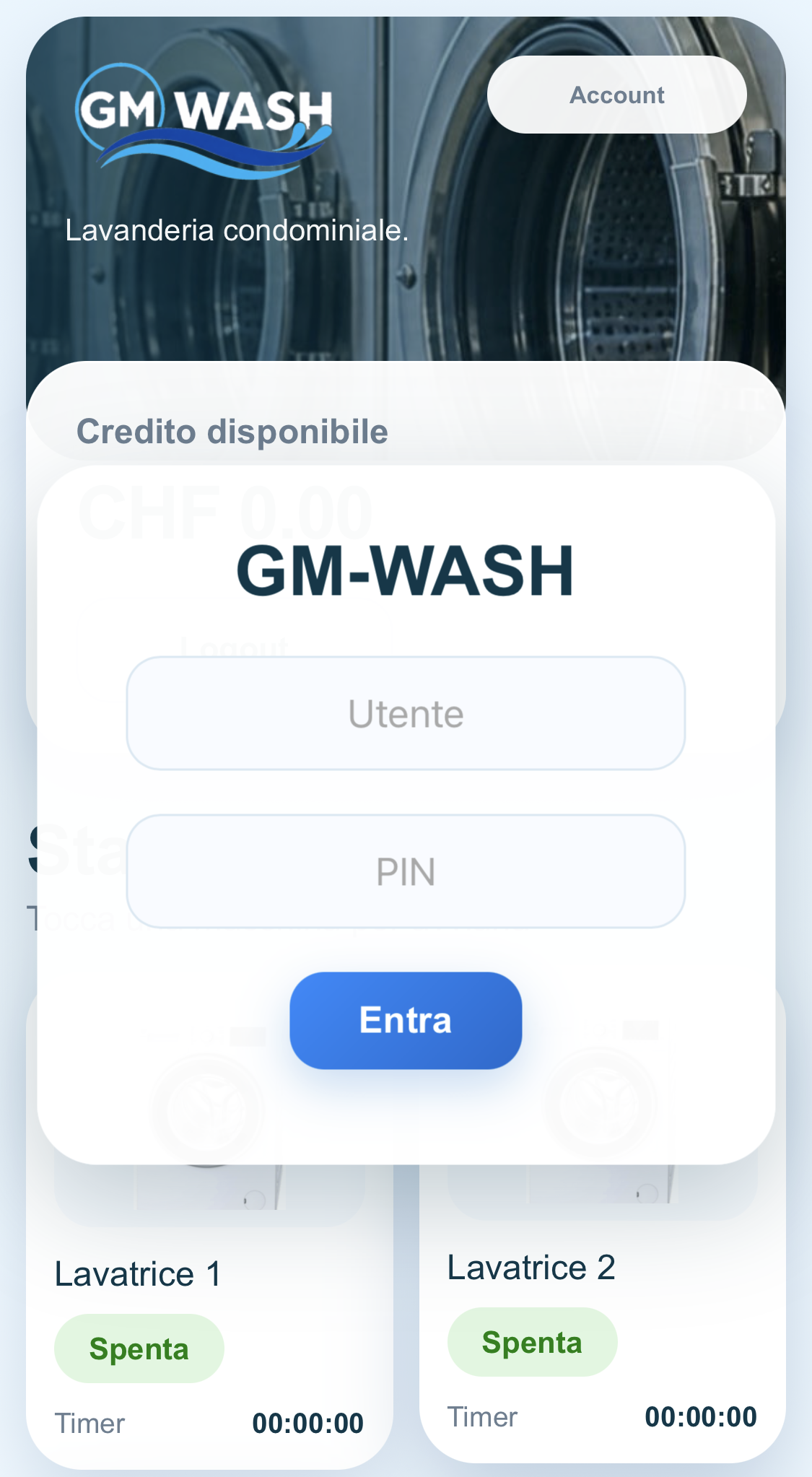
A digital platform for managing a self-service laundry, combining machine control, user credit, operational status monitoring and a dedicated web interface.
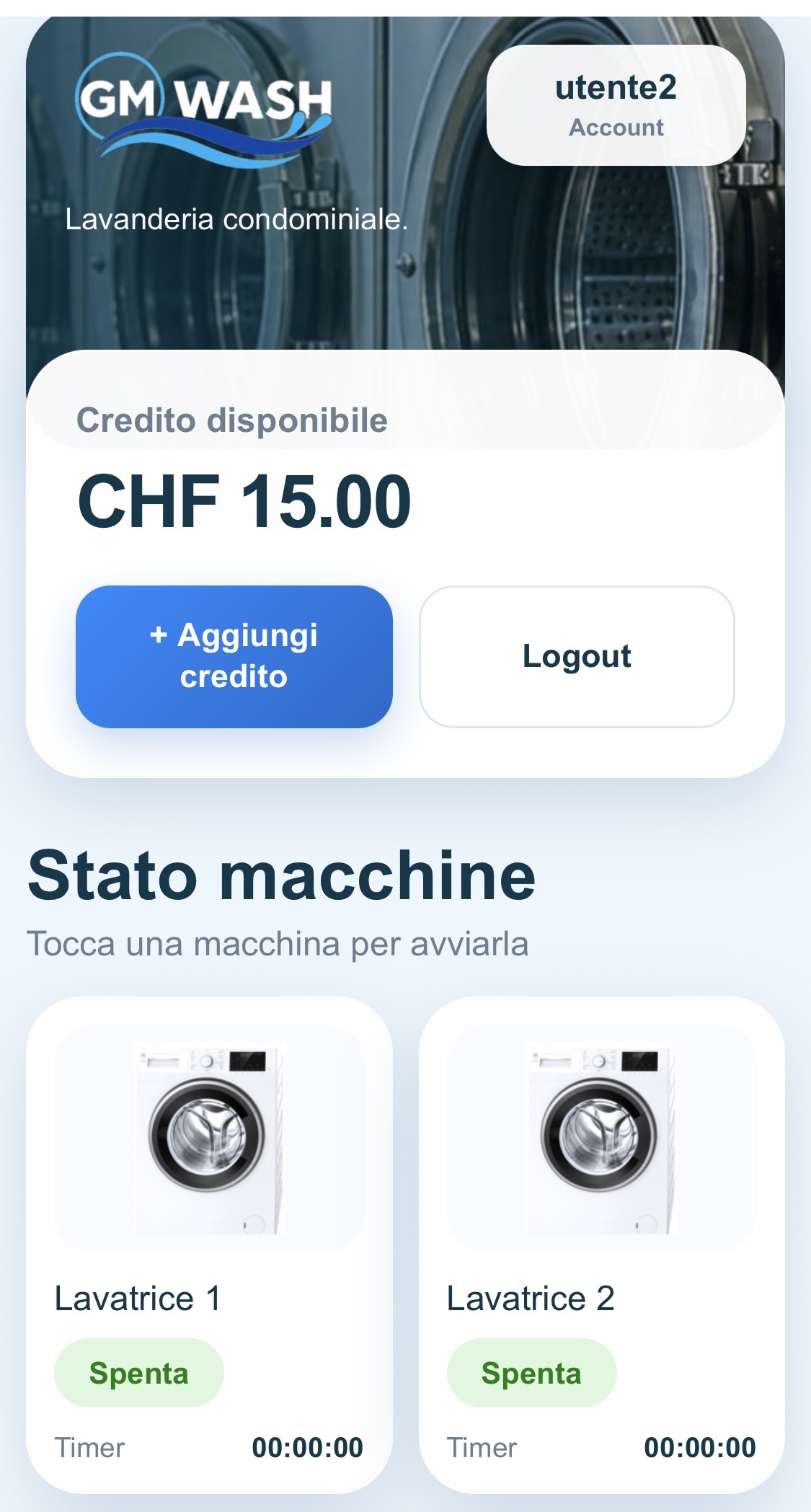
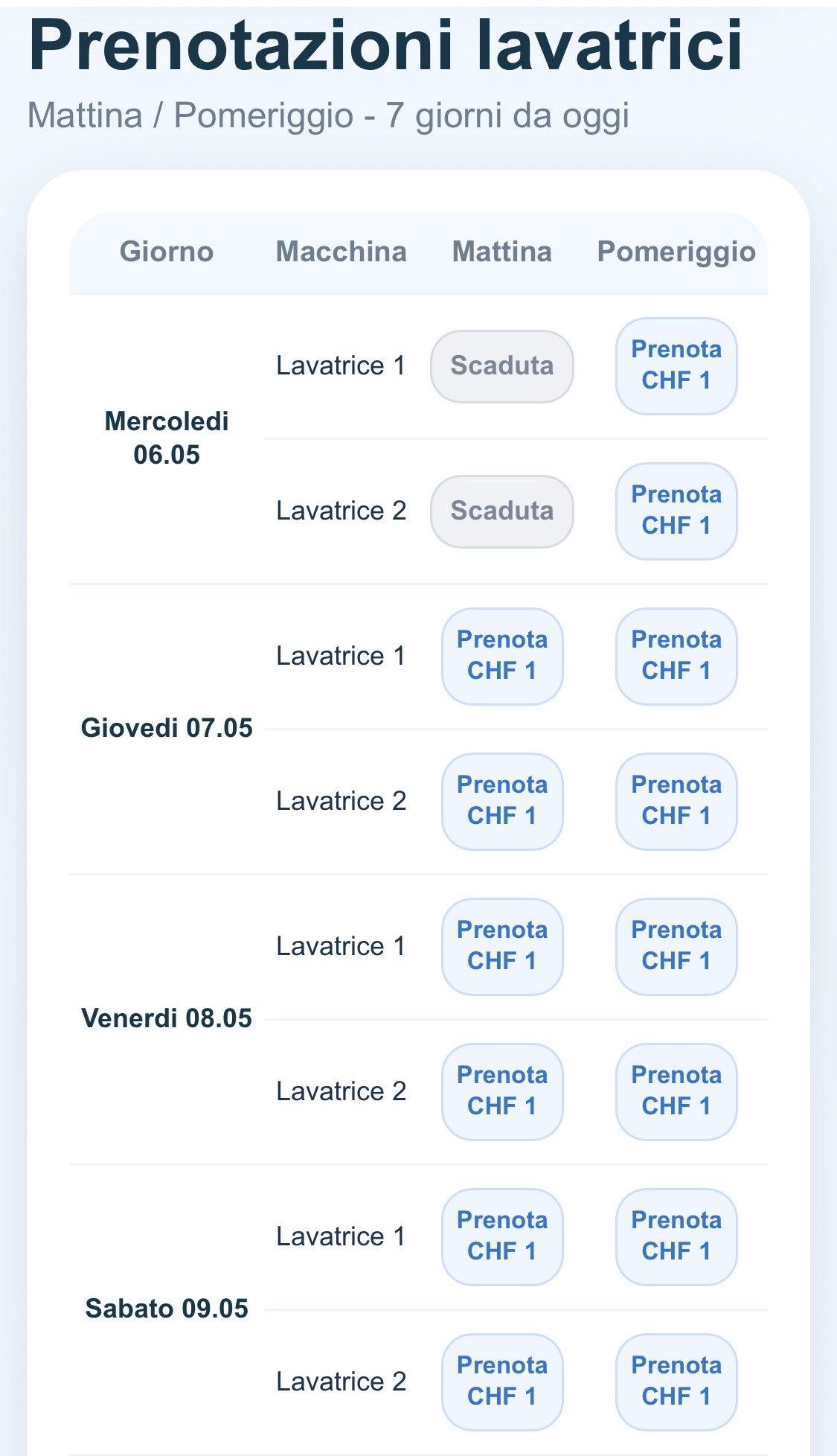
GM Wash was designed to transform the operation of a laundry service into a more modern, structured and controllable system. The goal is to provide users with a simple interface where they can view their available credit, add credit and check the status of the washing machines, while the administrator can monitor the system from a centralized operational view.
The project combines a hardware layer and a software layer. On the hardware side, an industrial Andino XIO controller is used to manage inputs, outputs and command signals. On the software side, a mobile-first web interface was developed to be used directly from a smartphone through a standard browser.
The interface displays the user’s remaining credit, the available machines, the occupied machines, the user currently assigned to a machine and the remaining cycle timer. This makes the service more transparent and reduces the need for manual supervision.
A key element of the project is the separation between standard users and the administrator account. Users can consult their credit and start machines according to the system rules, while the administrator has a broader operational view. This separation improves control, usability and security, making the system suitable for real-world service management.
From a technical perspective, GM Wash is a concrete example of service automation. It combines physical machine control, authorization logic, credit management, real-time status updates and user interface design. The result is a practical, scalable and user-oriented solution.
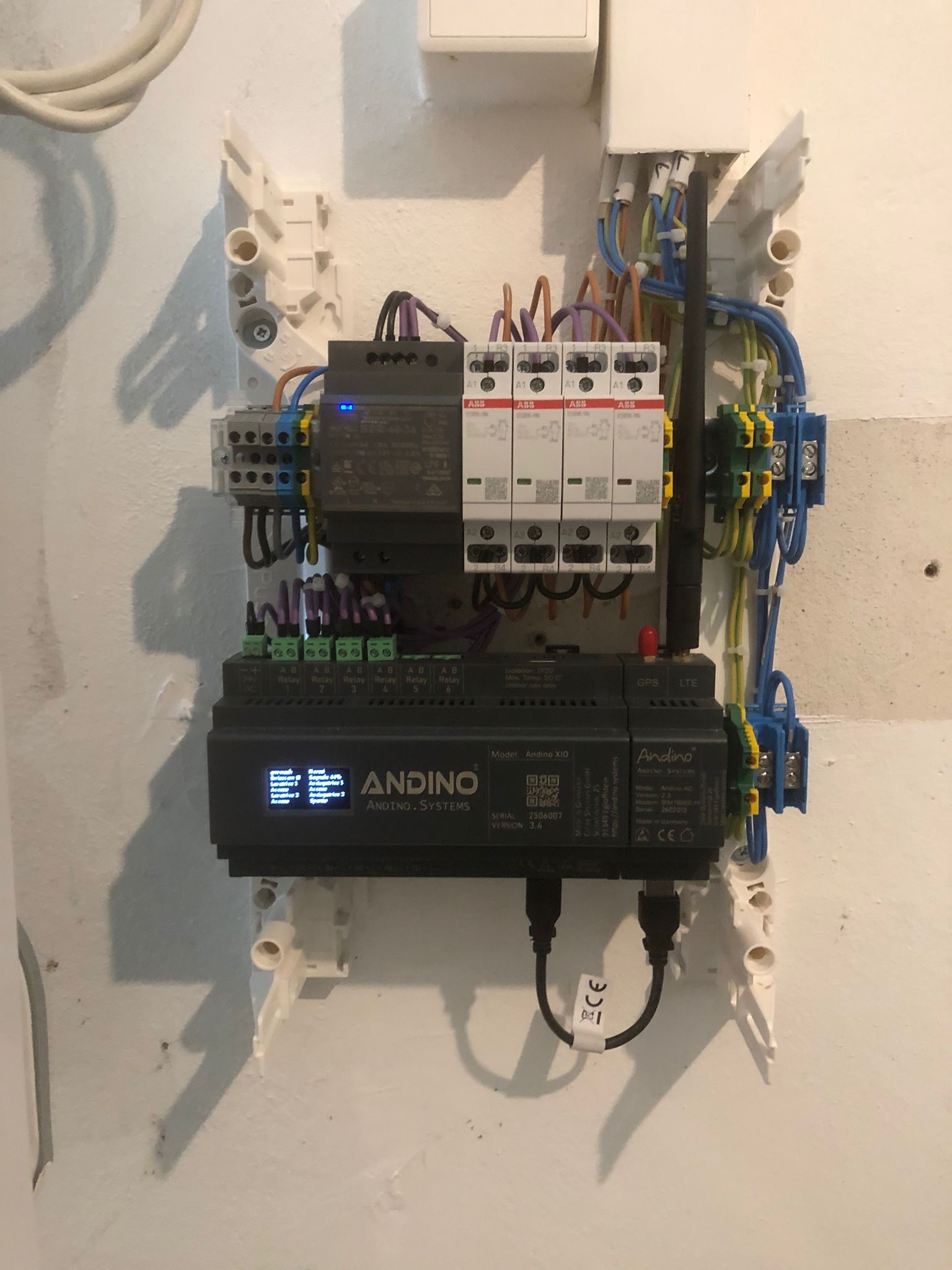
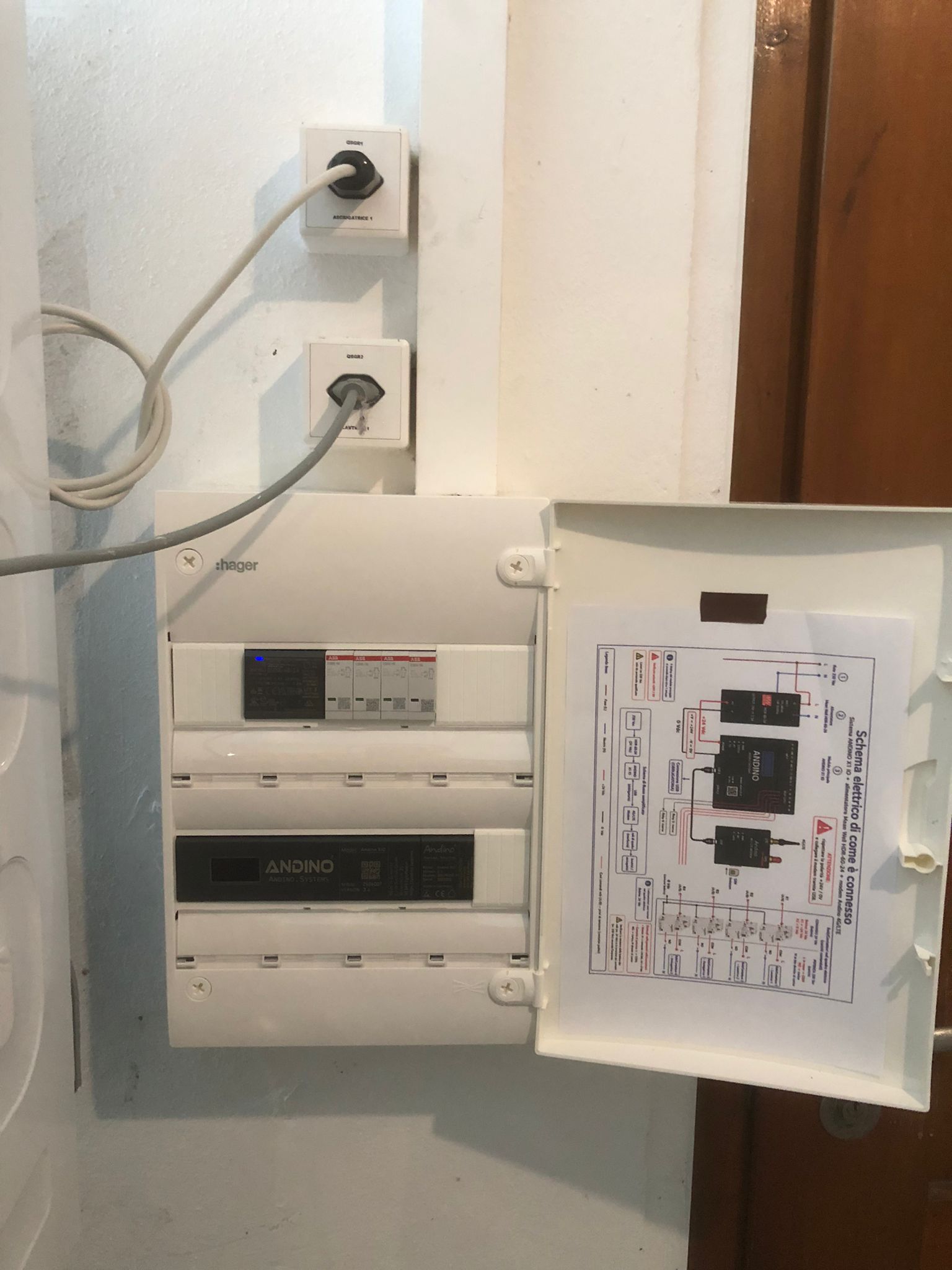
An integrated home automation system designed to improve safety, comfort, energy awareness and everyday control.
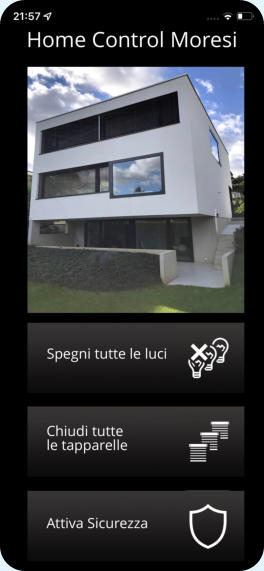
Home Moresi Control began with a very specific and practical problem: protecting the external shutters from strong wind and preventing damage to the house. This initial requirement became the foundation for a much broader smart-home concept, in which different household functions are connected, automated and monitored through a coordinated control structure.
The system includes lighting management, temperature control, alarm functions with UPS backup, automated notifications, camera surveillance with motion detection, a connected doorbell, automated shutters with local wind control, SGR connection, humidity monitoring, irrigation control and voice interaction through Alexa and Siri.
From a technical point of view, the project demonstrates the importance of integration. A modern smart home is not simply a collection of independent devices: it is an ecosystem in which sensors, actuators, power backup, security components and user interfaces communicate effectively. This makes the house more responsive, safer and easier to manage.
The result is a structured home-control environment that improves comfort, strengthens protection and creates a more intelligent relationship between the house and its occupants.
A multimedia infrastructure created to organize, store and access music and video content in a simple, reliable and centralized way.
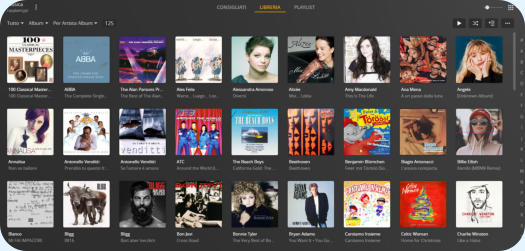
This project addresses a common but important need: keeping personal music and video collections accessible, organized and independent from scattered storage locations. Instead of relying on multiple devices or fragmented archives, the system centralizes multimedia content through a local and online server architecture.
The main advantage of this approach is control. Files can be stored, structured and accessed from different devices while maintaining a clear overview of the collection. The system improves convenience, reduces duplication and makes multimedia content easier to manage over time.
From a system-design perspective, this type of project requires attention to storage organization, network access, usability, backup strategy and long-term maintainability. A well-designed multimedia server is not only a storage solution, but a personal digital library that remains accessible, coherent and expandable.
A remote assistance concept designed to support safety, independence and peace of mind for elderly people living at home.
This project focuses on one of the most important challenges in modern family care: allowing elderly people to remain at home with greater independence, while giving relatives or trusted persons the ability to respond quickly in case of emergency.
The system combines video monitoring, emergency SOS functions and remote notifications. Its purpose is not to replace human care, but to create an additional layer of safety and awareness. In this way, the person living at home can preserve freedom and dignity, while the family receives essential information when intervention may be needed.
The concept can be extended with health-related monitoring, including blood pressure and selected vital parameters such as blood oxygen saturation. A daily report can also be sent to designated contacts, creating a discreet but continuous support structure for the third and fourth age.
The project combines technology, prevention and care. It shows how connected systems can be used responsibly to improve safety without creating an invasive environment or limiting personal autonomy.
A 3D-printed robotic dog controlled by a Raspberry Pi 4 and developed as a first functional robotics prototype.
MicroSpot is an experimental robotics project based on a 3D-printed mechanical structure and controlled by a Raspberry Pi 4. It represents the first working version of a robotic dog, combining mechanical assembly, electronic control, software configuration and movement experimentation.
The project uses ROS, the Robot Operating System, which provides a flexible framework for robotics development. ROS allows different components of the system to communicate, making it possible to manage movement, control logic and future extensions in a more structured way.
As a prototype, MicroSpot is particularly valuable because it creates a practical platform for learning and testing. Robotics requires the integration of many disciplines: mechanics, electronics, programming, sensors and control algorithms. This first version provides a concrete basis for understanding how these elements interact in a real moving system.
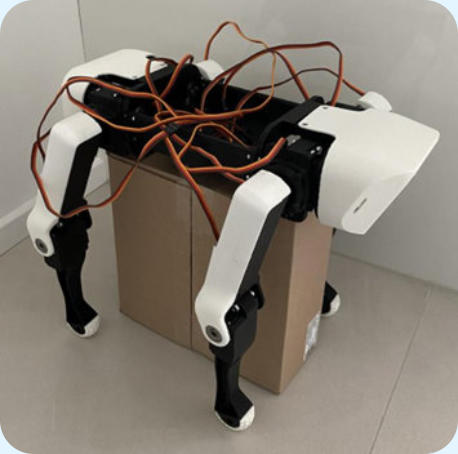
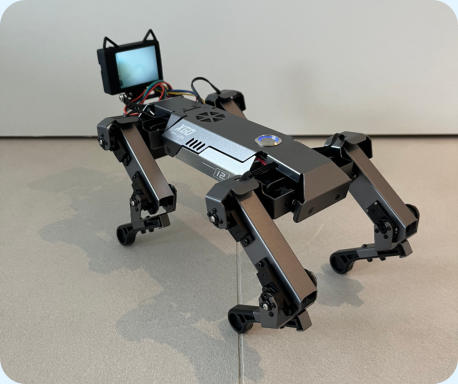
A more advanced autonomous robotic dog integrating sensors, artificial intelligence and compact computing.
MicroSpot v2 is the second evolution of the robotic dog project. Compared with the first version, it moves from a primarily experimental prototype toward a more integrated and autonomous robotic platform. The system uses an XGO skeleton, an AI camera, a Raspberry Pi Zero and distance sensors.
This version places greater emphasis on perception, autonomy and compact hardware integration. The AI camera and distance sensors allow the robot to collect information about its surroundings, while the computing unit provides the basis for control and decision-making.
From an engineering perspective, MicroSpot v2 represents a more mature step in the development process. It demonstrates how a robotic platform can evolve through iteration: starting from a basic working model, identifying limitations, improving the mechanical and electronic structure, and adding new capabilities such as environmental awareness.
The project is both a functional robotic experiment and a learning platform. It opens the door to future developments in autonomous navigation, object recognition, remote control, interaction and intelligent movement.